




Digitalization of social insurance requires a federal approach
Nowadays, people who are insured expect a service that works as easily as online banking: clear language, transparent steps, and digitally accessible at all times. Employers, in turn, want processes that avoid multiple entries and are legally compliant. At the same time, handling operations is becoming more complex. Consistent digitalization brings all interests together, provided the rules for digital communication, delivery, and file access are the same everywhere and the systems can communicate with each other.
Digitalization at the federal level
Digitalizing at the federal level does not mean that every agency builds its own system. It means that we agree on common principles and leave implementation to those with the relevant expertise. The federal government defines how digital procedures work with legal effect and which interfaces and data models are used. Cantons, compensation offices, and other institutions implement these rules and integrate their specialist systems. Step by step, without any obligation to use a single product. The data remains as close as possible to the point of implementation, while selected, client-separated services, such as for secure delivery, can be operated jointly.
Added value for anyone with insurance
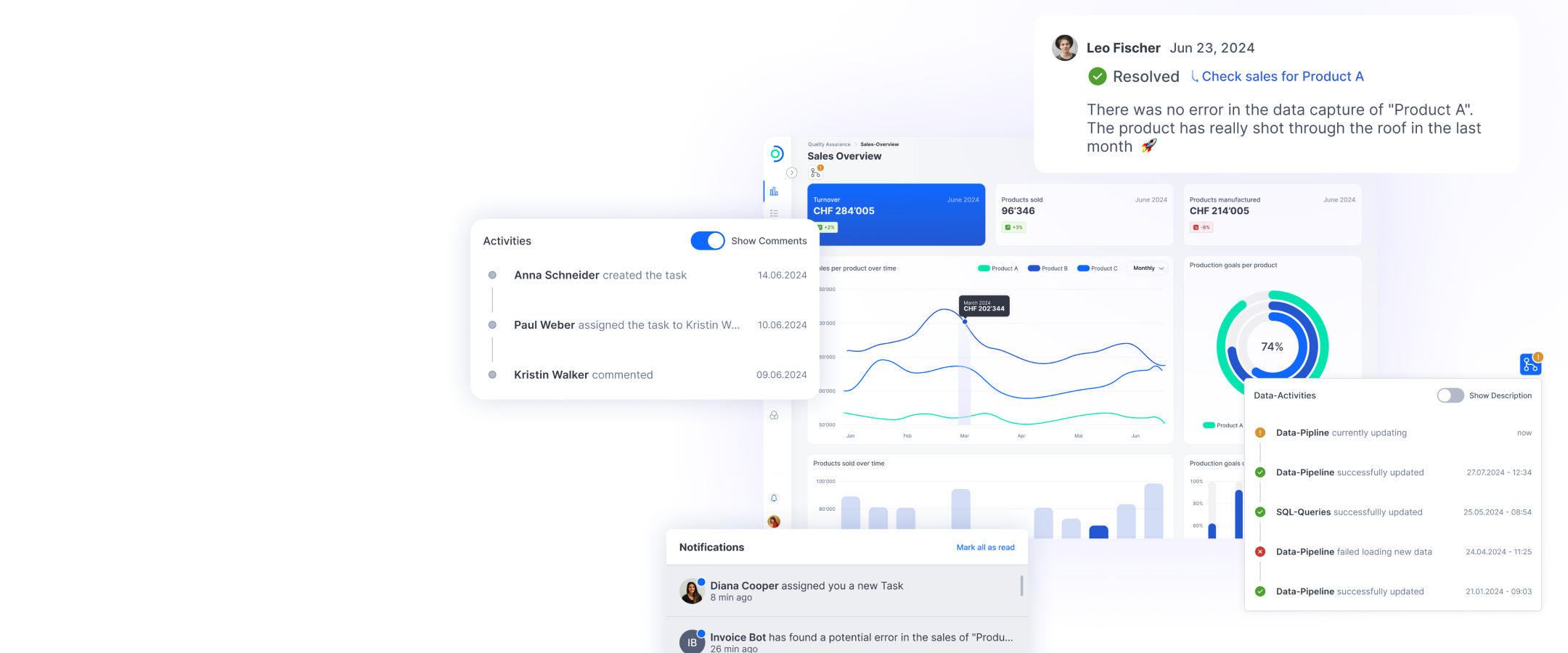
The effects can be seen in everyday life. After the birth of a child, parents no longer have to fill out several forms in different formats. A digital event triggers all the necessary steps. The system highlights any information that is missing, and communication is reliable and meets deadlines. After an accident, the insured person can see which office is currently dealing with their request and when a decision can be expected. Employers report once and can track the status. In the case of disability insurance, too, clarifications and rulings are delivered electronically in a legally compliant manner, appeal deadlines are transparent, and documents can be accessed at any time. Digitalization thus reduces uncertainty, speeds up processes, and builds trust.
The social insurance overview as a beacon
Clearly coordinated, federal digitalization of social insurance also creates significant added value for overarching goals such as a comprehensible overview of personal provision in all three pillars. Anyone who works, changes jobs, takes a break, or uses parttime models wants to know at a glance: How am I covered? Where are any gaps? How will decisions affect my pension? Secure, consent-based data sharing makes this possible: the insured person decides which information from the first pillar, the second pillar pension funds, and private pensions may be combined. There is no centralized data storage, but rather controlled consolidation, with clear protocols that can be revoked at any time. This creates transparency, which enables wiser financial decisions and strengthens confidence in the system.
Security and trust
Digitalization can only succeed if security and data protection are not seen as an afterthought, but as a fundamental principle. This includes strong and standardized login mechanisms, clearly defined roles and access rights, and transparent consent management. Data is only collected when it is necessary and is protected both during transmission and in storage. Shared services are operated with strict technical and organizational client separation. Independent tests and practiced emergency and fallback management ensure stable operations even in exceptional situations.
From concept to implementation
The path is straightforward if we follow it consistently. First, we create a uniform legal framework for digital processes that is technology-neutral, comprehensible, and barrierfree. Building on this, standards and interfaces are published, with reference examples and conformity tests, so that all those involved can connect quickly. The existing specialist systems are then connected in stages, with clear time windows and functioning fallback levels. We measure what counts during operation: shorter throughput times, fewer errors, greater satisfaction, and consistent availability. Where the figures are not yet correct, adjustments are made continuously instead of every few years in one big sweep.
Political classification
There is agreement on one thing: Social insurance law needs a sound basis for digital procedures. Not only in the first pillar (old-age and survivors’ insurance, invalidity insurance, loss of earnings compensation, supplementary benefits), but also in unemployment insurance, accident insurance, and family allowances. How this should be achieved remains a matter of debate. The federal government (Federal Department of Home Affairs/Federal Social Insurance Office) relies on joint services for the first pillar. At the same time, parliament and the cantons are calling for an overarching, technology- neutral legal framework that binds all branches. This raises the often-discussed question of competence: how far should central guidelines go without overriding federal implementation? There are three specific approaches: Firstly, binding standardization of digital procedures (e.g., electronic delivery, deadlines, powers of attorney, access to files) across all social insurance schemes. Secondly, platform services for the first pillar that facilitate secure communication and orchestration. Thirdly, an action plan with milestones, reference interfaces, and conformity tests to accelerate the connection of institutions and avoid duplication. Stakeholders take a pragmatic view of this. The providers and cantons emphasize interoperability and clear responsibilities, business associations expect speed and reliable APIs, while social partners value transparency and data minimization. The main obstacles are legacy systems, different data models, and uniform identity and authorization concepts. A federal approach addresses these issues by specifying the law and standards, but strengthening implementation on a decentralized basis. The path we take will be determined not least by politics: politicians will have to decide whether to implement the centralized information system for social insurance (BISS) proposed by the federal government, or whether to pursue the federal approach of parliament with a reform of the Federal Act on the General Aspects of Social Insurance Law (eATSG), combined with standardized access to all personal insurance data.
Conclusion
Digitalizing social insurance means comprehensible processes, the same rules for everyone, open interfaces, and responsibility where it belongs. Combining these principles creates tangible benefits for people and companies and makes the system sustainable in the long term. Let’s take the next steps together: pragmatically, federally, and securely. In this way, we will not only achieve a milestone in terms of social insurance services, but also an important social goal: a genuine overview of social insurance provision that provides guidance for all those insured.
ti&m Special “AI & Open Source”
Why AI and open source belong together
Special, Digital Banking
Screen people efficiently using AI
Artificial intelligence // In collaboration with ti&m, the Financial Market Authority (FMA) of Liechtenstein developed a selflearning tool to automate the process of screening exposed persons. In addition to improved results, “Fit & Proper” has also resulted in a noticeable reduction in the workload of the FMA’s specialists.
Roger Guntli - Jan 23, 2023
Special, Digital-Trust
“Facial recognition in public spaces needs to be discussed in society”
Dr. iur. Dominika Blonski - Jul 1, 2024
Digital Banking, Special
“Trust is fragile – it needs constant care and humility”
Mathias Imbach - Apr 22, 2025